- Protect the book from light, moisture, heat, and rough handling before anything else
- Keep a simple record of condition, edition details, and ownership history
- Make transfer plans so the next person understands both value and care needs
A valuable old book can hold three kinds of worth at once: financial, historical, and personal. If you want to preserve it and eventually pass it on, you need to think like a long-term caretaker, not just an owner. That means protecting the book’s physical condition, keeping track of what makes it important, and making transfer instructions clear enough that the next person can act on them. The right approach depends on the book’s paper, binding, storage history, and why it matters to you or your family. In many cases, careful handling and basic records do more for long-term value than expensive restoration.
Start by identifying what makes the book valuable
Before you change how you store or handle the book, slow down and identify what kind of value it has. A book may be valuable because it is rare, because it is in unusually good condition, because it has an important signature or inscription, or because it has family meaning that cannot be priced easily. Those different forms of value can lead to different decisions. For example, a heavily annotated family copy may matter more to heirs than to a collector, while a clean, complete early edition may be better left untouched.
Look at the title page, copyright page, binding, dust jacket if one exists, and any marks of ownership. You are not trying to appraise the book yourself in a technical sense; you are trying to gather enough information to understand what you have. Write down the title, author, edition details, publisher, printing clues, and any unusual features such as a handwritten note, special binding, or inserted material. If you cannot tell whether a mark is important, do not erase or clean it casually. Uncertainty is a reason to preserve, not to improvise.
Condition matters as much as scarcity. A common edition in excellent condition can be more desirable than a rarer copy that has been handled carelessly. That is why your first job is not repair but restraint.
Handle the book as little as possible and with clean, dry hands
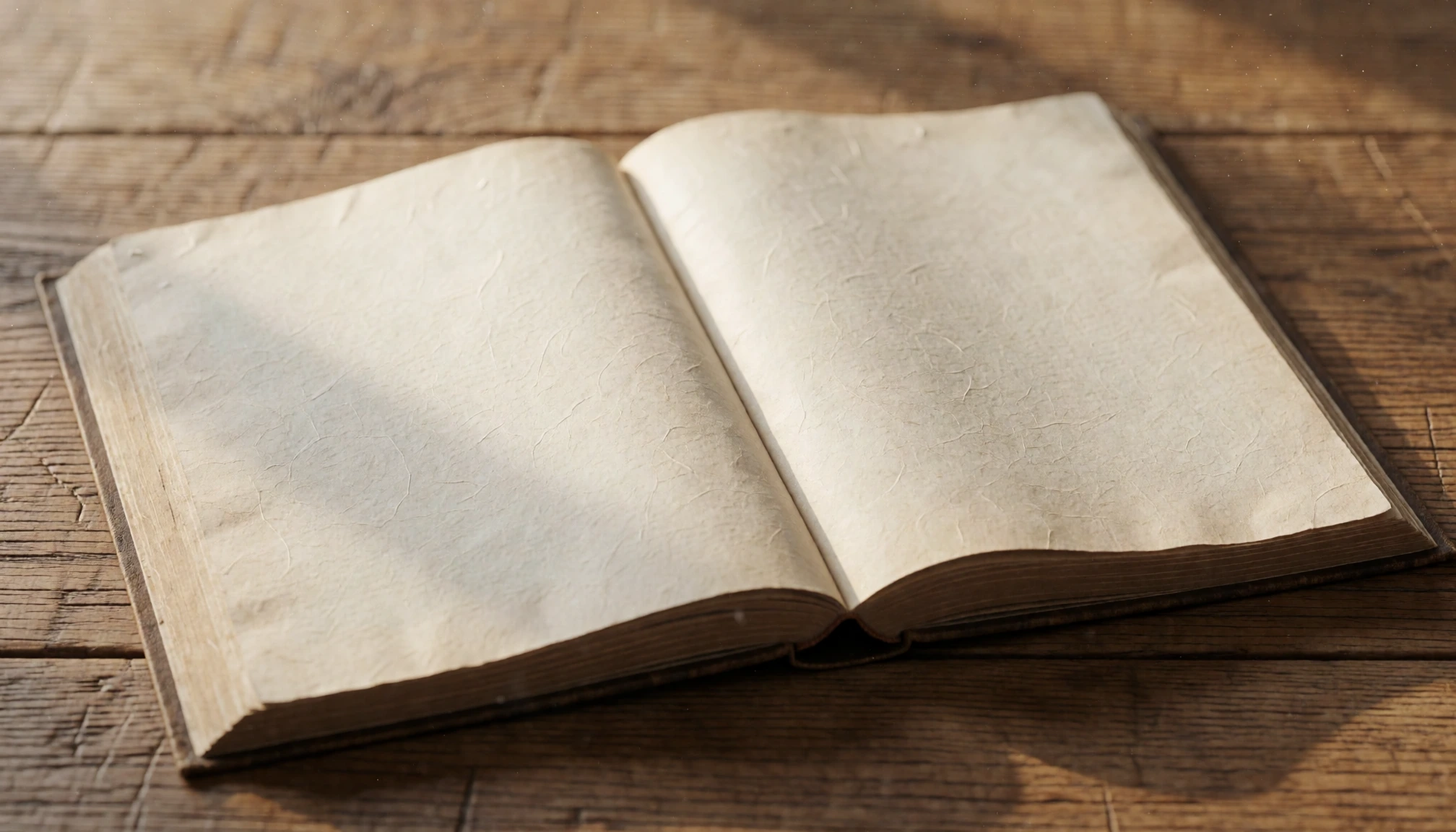
A valuable old book can be damaged by everyday habits that seem harmless. Repeated opening, bending the spine, pressing pages flat, or stacking other items on top of it all create wear. If the binding is fragile, even lifting the book by one cover can strain the joints. The goal is to reduce stress every time the book is touched.
Handle the book only when necessary, and prepare the surface first. Use a clean, dry, stable table. Keep food, drinks, and strong sunlight away. When you turn pages, support the book so it does not force open wider than it naturally wants to. If the spine feels stiff, do not pry it. If you need to examine it closely, move slowly and stop if you feel resistance. Force creates damage that cannot be reversed.
You do not need special gloves in every case. In many situations, clean, dry hands are better than gloves that reduce grip and increase tearing risk. The main point is to avoid oils, dirt, and moisture. If your hands are sweaty or dirty, wash and dry them first. If you must move the book for storage or transport, support it from underneath rather than pinching the cover or spine.
Be especially careful with loose inserts, maps, or folded plates. These can slip out unnoticed, and once they are separated from the book, the historical record becomes less complete.
Create storage conditions that slow deterioration
Storage is the most important day-to-day factor you control. Old books deteriorate faster when they are exposed to light, humidity swings, heat, dust, or pressure. You do not need a museum-grade room to make a meaningful difference, but you do need consistency.
Aim for a location that stays reasonably cool, dry, and dark. Avoid attics, basements, garages, and exterior walls if you can. These places tend to experience temperature and moisture swings, which are hard on paper and binding materials. Direct sunlight is especially harmful because it fades covers and weakens paper over time. Even bright indoor light can matter if the book sits exposed for long periods.
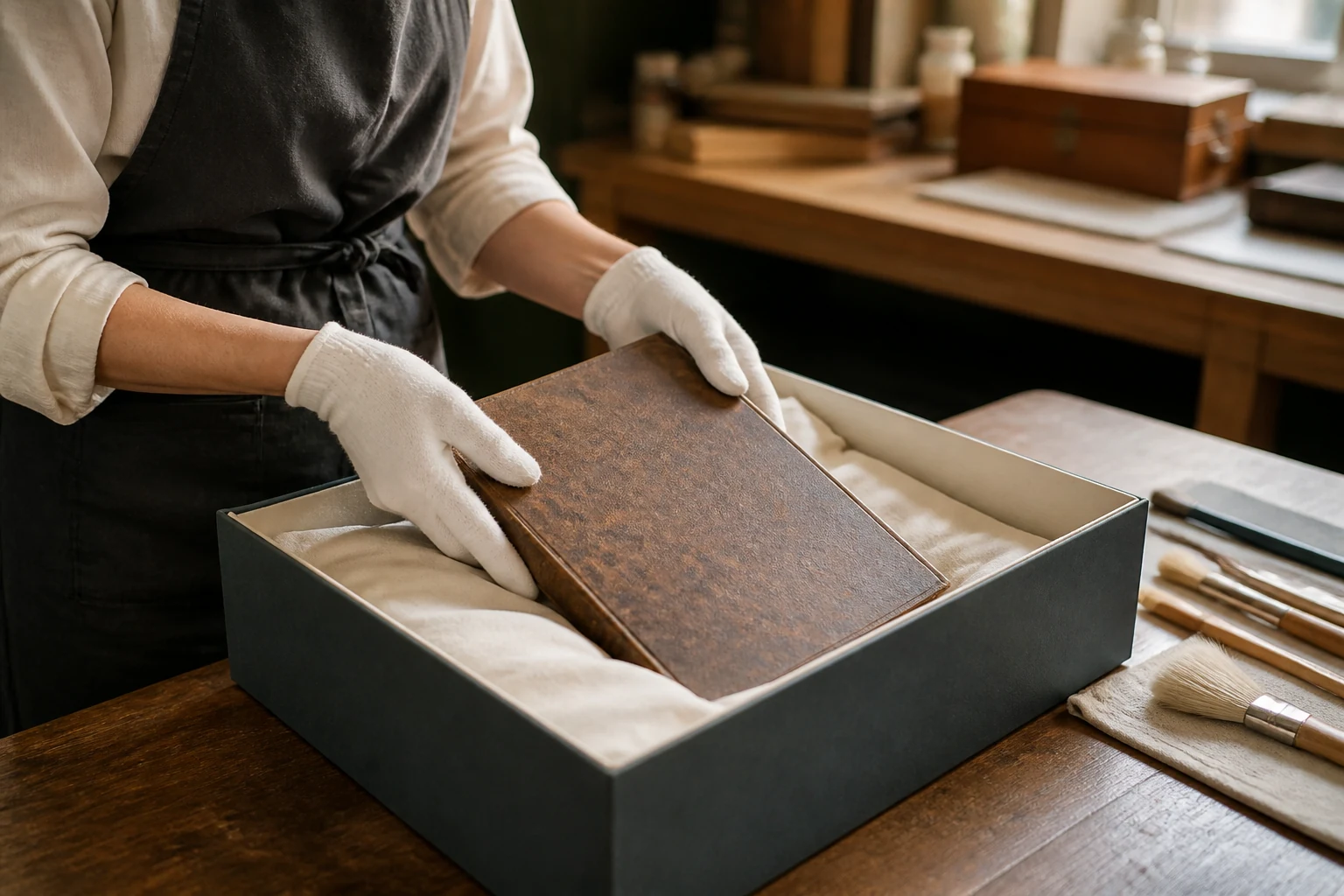
Store the book upright if it is firmly bound and of standard size, with enough support to keep it from leaning. If it is oversized, brittle, or too delicate to stand safely, it may be better to store it flat. Do not pack it tightly between other books. It needs gentle support, not compression. If you use a box or enclosure, choose one that is clean, acid-free, and sized so the book is not rattling around. The enclosure should protect the book from dust and light without trapping dampness.
Avoid overhandling the storage container as well. Pulling the book in and out repeatedly can be worse than leaving it protected in place. If you expect the book to stay in family care for years, choose storage that is simple enough for others to maintain without guesswork.
Decide carefully before repairing, cleaning, or rebinding
Old books often show wear, and not every flaw should be corrected. There is a major difference between preserving a book and trying to make it look new. Heavy cleaning, amateur tape repairs, aggressive glue, and unnecessary rebinding can reduce value or destroy evidence of the book’s history. Once original material is removed, it cannot be restored.
If the book has minor surface dust, a very soft, careful cleaning may be enough, but only if you understand the risk and can do it without abrading the paper or rubbing away labels, signatures, or annotations. Never use household cleaners, adhesives, laminating materials, or makeshift strengthening methods. Tape, in particular, becomes a long-term problem because it can stain, harden, and pull apart paper when removed later.
Professional conservation can make sense when the book has structural damage, such as a detached cover, brittle pages, or active deterioration. But even then, the right choice is often stabilization rather than cosmetic improvement. The question to ask is not “Can this be made to look better?” but “What treatment would keep the book safest while preserving original material?” That distinction matters because future owners may care more about authenticity than polish.
If the book is already damaged, photograph it before any treatment. Keep notes about what was changed and why. That record helps later caretakers understand what is original and what has been altered. When a valuable book is passed on, clarity about past repairs is part of its value.
Document the book so the next owner understands its history
A preserved book is easier to pass on when its story is documented. You do not need a formal catalog, but you do need a clear record that another person can read years later. This is especially important when family members may not know why the book is important or how to care for it.
Record the basics: title, author, edition, approximate physical condition, binding type, inscriptions, notable marks, and where it has been stored. Add your own notes about how it should be handled, whether it has fragile pages or detached material, and whether it has undergone any treatment. If there is a family connection, explain it plainly. A note that says “belonged to your great-grandparent and was kept in the study” may help later generations value it more than an unlabeled object would.
It also helps to keep photographs. Take clear images of the cover, spine, title page, important inscriptions, and any damage or special features. Make sure the photos are saved in more than one place so they are not lost with a single device. The goal is not a glossy archive; it is a practical reference. If the book is ever separated from your household records, the images and notes can still prove identity and condition.
If you believe the book may have substantial market value, consider having it informally reviewed by a qualified appraiser or rare-book specialist. You are not looking for a sales pitch. You are looking for a cautious opinion on edition, rarity, and condition. Keep in mind that value can change with the market and with the completeness of the information available, so any estimate should be treated as conditional rather than permanent.
Plan the transfer so preservation continues after you are gone
Passing on a valuable old book is not just a legal issue; it is a continuity issue. The next owner needs enough information to keep it safe and to understand whether it should remain in the family, be sold, donated, or held as an archive item. If you leave that vague, the book may end up stored badly, separated from its records, or handled as if it were ordinary reading material.
Start by deciding who should receive it and why. If one person is best suited to care for it, say so directly. If the book should remain with the family as a shared item, explain who will be responsible for it and where the supporting records are kept. If your goal is to preserve its monetary value, your instructions should emphasize condition, documentation, and any restrictions on cleaning or repair. If your goal is personal legacy, explain the story behind the book so the next holder understands why it matters.
Put those instructions in writing where they are likely to be found. That might be with estate papers, a personal inventory, or a family letter kept with the book’s records. Use plain language. Avoid vague phrases like “take care of it” without saying what that means. Be specific about storage, handling, and whether the book should be lent, displayed, or moved.
If the book is part of a larger estate, make sure it is not treated as an ordinary household item during distribution. Valuable books can be overlooked if heirs do not know their significance. Clear labeling and documentation reduce the chance of loss, conflict, or accidental disposal.
Balance monetary value with family meaning
Not every valuable old book should be treated the same way. Some deserve the most careful preservation because their market value depends on originality and condition. Others are more valuable because of annotations, association, or memory. You may need to decide whether to preserve the book as an artifact, circulate it within the family, or convert it into financial value through sale.
If the book has strong sentimental value, the most important task may be to preserve evidence of ownership and use. That can include keeping inscriptions, bookmarks, or notes that are part of its history. On the other hand, if the book has clear collector interest, excessive handling or display may reduce its appeal. In that case, the wisest choice may be long-term storage with limited access.
These goals are not always in conflict, but they require honesty. A family heirloom does not need to be “improved” to be meaningful. A collector’s item does not need to be read casually to remain valuable. What matters is matching the care plan to the purpose. If the purpose changes later, update your instructions rather than assuming the old plan still fits.
A useful habit is to revisit the book’s condition periodically without making unnecessary changes. Check for signs of mold, warping, pests, or loose materials. If something seems to be changing, act early. Small problems are easier to address than major ones, especially with paper and binding.
A valuable old book is easiest to preserve when you treat it as both an object and a responsibility. Protect the physical item, record what you know, avoid well-intended damage, and leave clear instructions for the next person. If you do those things, you increase the chance that the book will remain legible, understandable, and worth keeping long after it leaves your hands.